


ROOTS side table
designer: Reinier de Jong
ROOTS is approached as a silent construction in which form is not added, but arises from an accumulation of simple geometries. The object seeks no expression in complexity or in recognizability as a typology, but in repetition, proportion, and tension within a limited formal vocabulary.
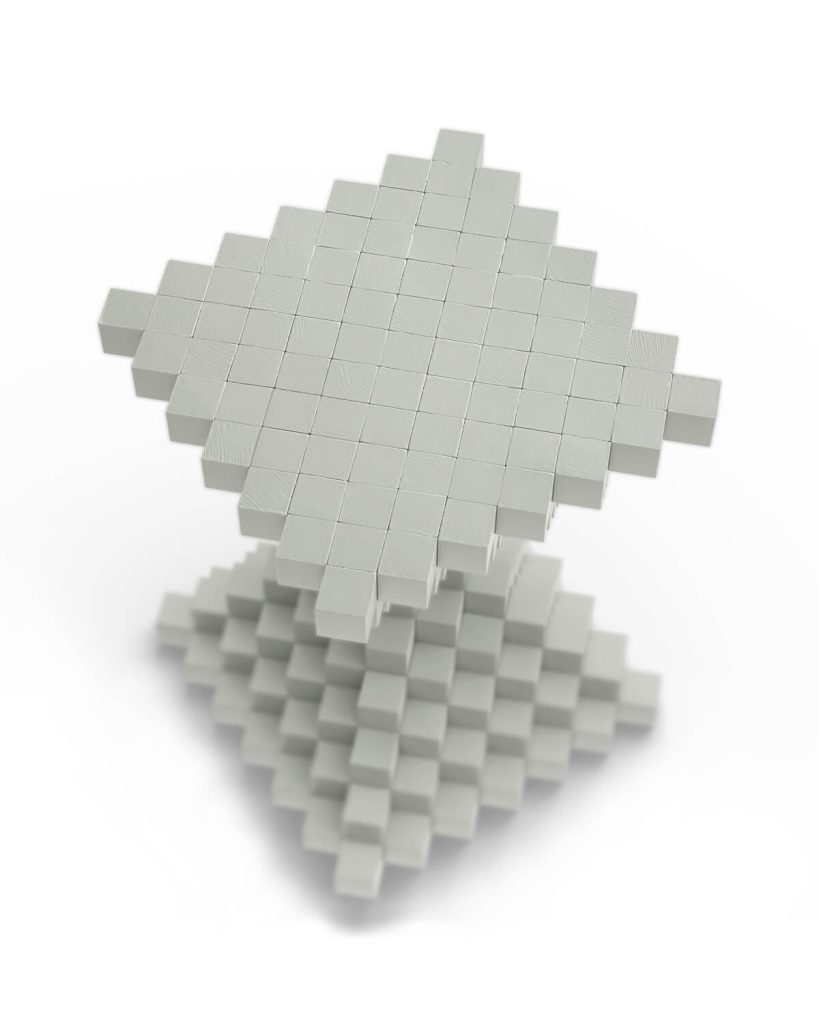
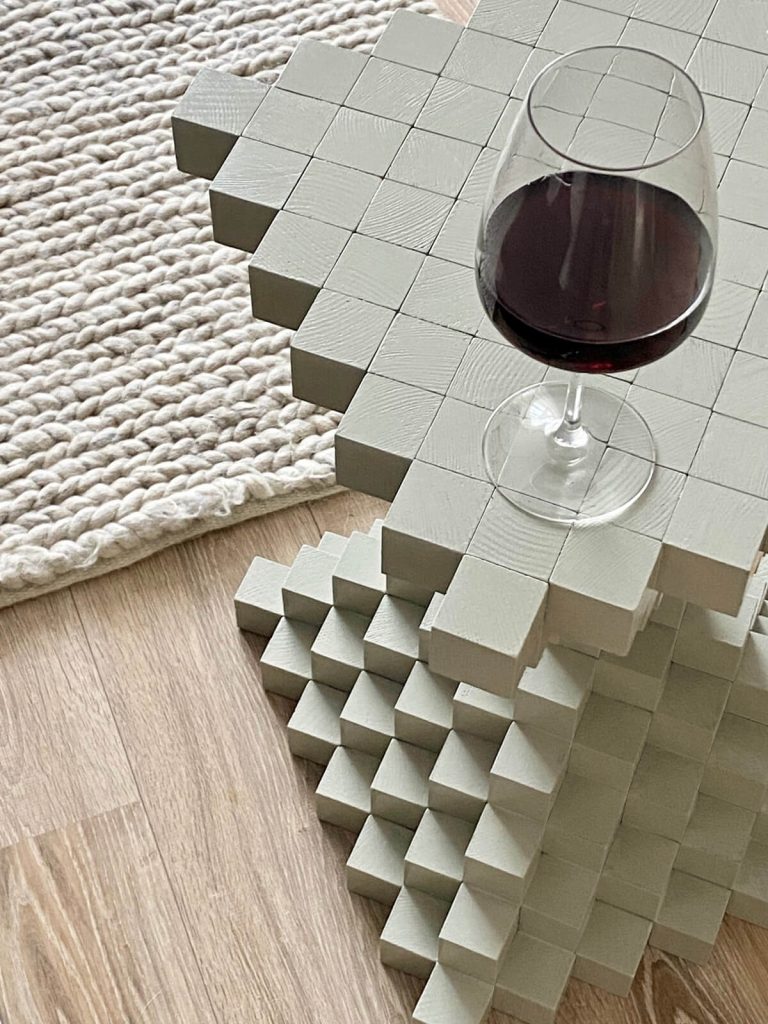
At first glance, ROOTS appears massive and monolithic, almost as if carved from a single volume. That impression is deliberately ambiguous. The table consists of a succession of precisely proportioned elements that together form a layered structure. This creates a field of tension between what is perceived as mass and what is in reality an articulated structure.
The formal language is built around an almost archaic logic of pyramidal sequences. From a refined, slimmer central section, an identical, stepped structure unfolds both upwards and downwards. This symmetry creates a quiet verticality, in which the table presents itself not as an object with a beginning or an end, but as a continuous movement in two directions.
The stepped structure is not decorative, but structurally defining. It introduces rhythm and gradation into what is perceived from a distance as a compact volume. The eye is slowed down: what initially appears as a closed mass unfolds in layers of decreasing and increasing scale, without ever fully breaking open.
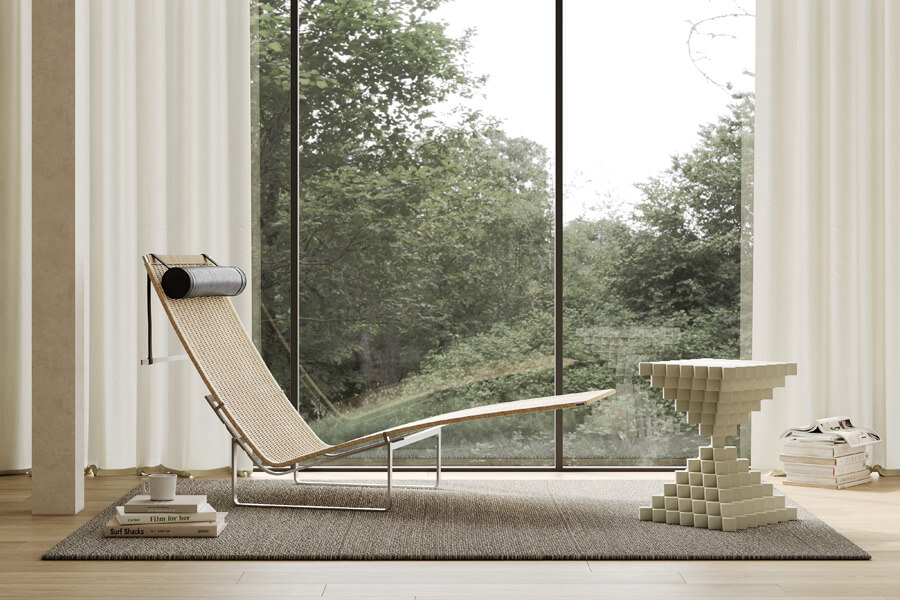
Materially and formally, ROOTS remains restrained. The expression lies not in contrast or gesture, but in proportion, repetition, and the subtle shift between perceived and actual density. The object positions itself as a quiet anchor in space—precise, constructed, and at the same time ambiguous at first reading.
